SEA LEGS FOR LIFE

Keep the water in your life.

Fit what you can manage to what the boat asks.

GC Integrative’s developing VIP yacht program for owners and their families. A personally scoped approach to understanding your movement, the routes that matter onboard and your vessel environment.

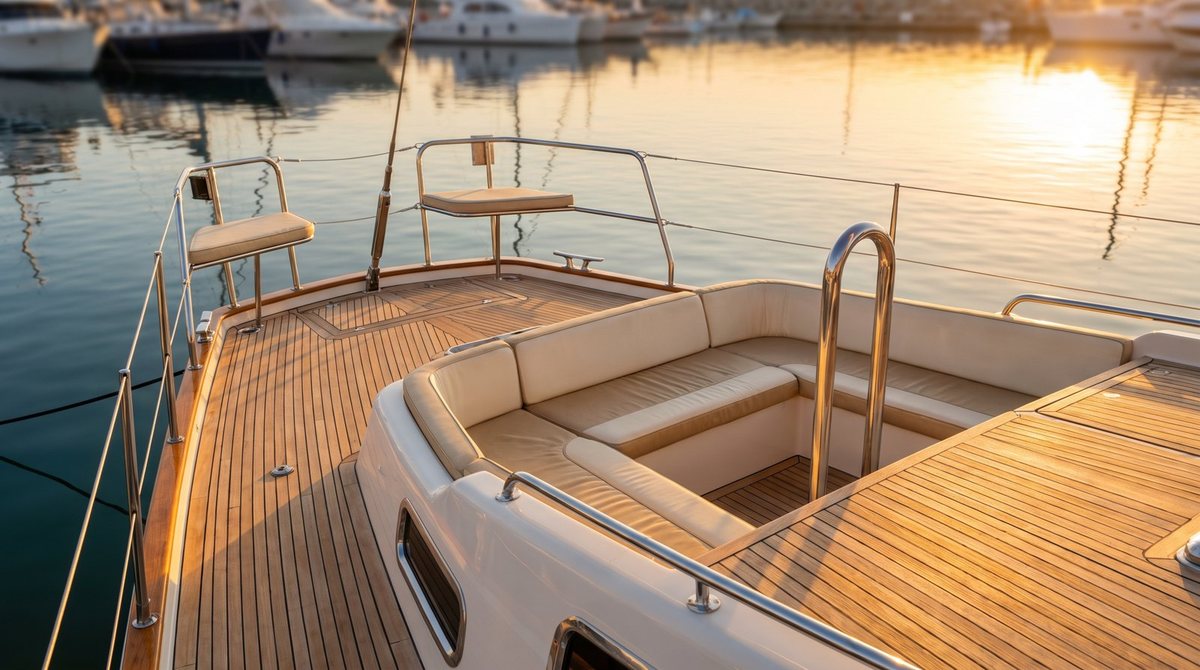
AI-generated illustration of an empty yacht deck in a calm marina
Sea Legs for Life considers the person, the task and the vessel together.

For the people who want to keep life on the water.

Yacht owners & families. When boarding, steps or everyday routes need more individual consideration.

A vessel worth understanding. From practical movement questions to modification concepts that require separate marine review.

A considered first conversation. Gold Coast first. Private enquiries welcome; availability, scope and contributors are confirmed individually.

Sea Legs for Life is part of GC Integrative Physiotherapy & Wellness. It is distinct from our private in-home care and funded-care pathways.

Start with the person, the task and the boat.

Gary introduces the person, task and vessel approach in under forty seconds. A transcript is available below.

Read the video transcript

Before the engine starts, your boat has already asked some questions. Where will I put my foot? What will I hold? What is the gap doing? And what will change before I move?

You know boats. I know movement. Today, let us put those kinds of experience together.

This is Sea Legs for Life. The promise is simple: Keep the water in your life.

Begin with the movement you want to keep doing and the route you want to understand better. That is enough for a useful conversation.

AI-generated presenter video using Gary Chen's configured HeyGen Photo Avatar and voice. Captions are available from the player controls.

A clear plan before a costly change.

For yacht owners who want to keep enjoying a meaningful route or activity as their mobility needs change. We are developing a private-pay pilot on the Gold Coast, beginning with an individually scoped assessment.

Your capacity. Your route.

A physiotherapy-led assessment, an agreed onboard observation and relevant occupational therapy input bring the person, the task and the vessel together. The first visit would normally be alongside, not a challenging sea trial.

A report you can act on.

Your scoped report would document the selected route, observations and limitations, ranked priorities, options to explore, professional responsibilities and the next decision. Marine feasibility is considered before detailed modification options are committed.

Separate approvals. One shared goal.

Any design, equipment or installation work needs its own scope, quote and your approval. Our proposed pilot model uses separate specialist contracts, with optional GC Integrative coordination and a separately scoped functional review after technical handover.

Before you commit: you would receive a written assessment scope, fee and applicable GST, named contributors, exclusions and cancellation terms. Equipment, engineering, installation and ongoing reviews are not automatically included. Pilot availability remains subject to professional, insurance and operating readiness.

Three parts. One functional fit.

Person capacity, task demand and vessel environment interact. Considering them together helps identify where a route becomes difficult and which questions need professional review. This is a reasoning framework, not a validated risk equation.

Person capacity, task demand and vessel environment model Three overlapping circles labelled Person capacity, Task demand and Vessel environment. Their shared centre is labelled Functional fit and risk. PERSON CAPACITY sense, plan and physically manage TASK DEMAND stepping, turning, rising, descending, carrying, reaching or recovering VESSEL ENVIRONMENT motion, surface, gap, geometry, support, light, layout and conditions FUNCTIONAL FIT AND RISK
Functional fit isn't a score, a diagnosis or a certificate. It's a practical way to ask why a movement feels straightforward in one situation and difficult in another.

Person capacity

Person capacity is what someone can sense, plan and physically manage.

Task demand

Task demand is the movement: stepping across, turning, rising, descending, carrying, reaching or recovering.

Vessel environment

Vessel environment is the motion, surface, gap, geometry, support, light, layout and conditions.

Understand the person. Observe the task. Review the vessel.

The principle stays. The route changes.

These examples are observation prompts, not assessments or findings. Vessel layout, equipment, conditions, operating procedures and crew roles vary.

01 Compact recreational vessel
Illustrative compact-vessel route showing a pontoon-to-cockpit boarding gap
Illustrative scenario

Pontoon to cockpit

Task: step across a changing gap, then turn into the cockpit.

Person
Step capacity, timing, reaction and confidence.
Task
Weight transfer, foot placement and turning.
Vessel
Gap, level change, support, surface and conditions.
02 Mid-size yacht
Illustrative mid-size yacht route showing the approach from cockpit to cabin
Illustrative scenario

Cockpit to cabin

Task: approach and use a companionway while the vessel moves.

Person
Gait, control between levels, reach and fatigue.
Task
Turning, stepping, hand transition and route planning.
Vessel
Companionway geometry, threshold, handholds and light.
03 Large yacht
Illustrative large-yacht interior route approaching a visible threshold at night
Illustrative scenario

Seating to bathroom at night

Task: rise in motion, cross the interior and manage level changes.

Person
Sit-to-stand capacity, orientation, balance and reaction.
Task
Transfer, walking, door use and direction changes.
Vessel
Night lighting, glare, shadows, stairs and thresholds.
Illustrative scenarioMovement. Weather. Water. Timing. One deliberate supported step on a wet deck. Silent video.
Illustrative large-yacht interior route stopping before a clearly visible threshold at night
Static illustrative scenarioSupport. Surface. Route. Light. Conditions. The route stops before one visible threshold.

Support. Surface. Route. Light. Conditions.

Ten steps, developed around one meaningful route.

This is the multidisciplinary pathway GC Integrative is developing. It describes how a future assessment could be structured. It does not confirm current availability, a professional network or an installation service.

Illustrative before view of a yacht night route with a low-contrast threshold
Before observation
Illustrative after concept of the same route with clearer edge cues and task lighting
After concept

Illustrative concept only. Product selection, electrical work, fixing and installation require separate professional review.

Experience the 10-Step Yacht Mobility Pathway
  1. 01

    Initial Conversation and One Meaningful Goal

    Clarify what the person wants to keep doing and which route or task matters most.

  2. 02

    Physiotherapy-Led Functional Assessment

    Consider relevant movement capacity within physiotherapy scope.

  3. 03

    On-Vessel Route Observation

    Observe the chosen task in context when appropriate and agreed.

  4. 04

    Consented Photo and Video Analysis

    Capture only what is agreed, for a defined assessment purpose and with explicit consent.

  5. 05

    Person x Task x Vessel Risk Mapping

    Map the interaction between person capacity, task demand and vessel environment.

  6. 06

    Multidisciplinary Healthcare Review

    Bring physiotherapy, occupational therapy, medical and other relevant expertise together when the person's needs require it, with each profession staying within scope.

  7. 07

    Assessment Report and Shared Priorities

    Bring the observations, priorities, boundaries and proposed next steps into one clear record.

  8. 08

    Integrated Equipment and Modification Concepts

    Identify options for further review, without treating a concept as an approved marine solution.

  9. 09

    Marine Feasibility and Premium Installation

    Marine feasibility starts while options are being considered. Installation proceeds only after technical design, a separate quote and your approval, followed by specialist technical handover.

  10. 10

    Reassessment and Refined Freedom

    Review the selected route and person-task-environment fit after any agreed intervention.

Why physiotherapy is one part of the answer.

The model brings clinical, functional, accessibility and marine perspectives together. Each contributor stays within professional scope.

01

Physiotherapist

The physiotherapist leads movement, function, capacity and task analysis.

02

Occupational therapist

The occupational therapist contributes occupation, accessibility, assistive technology and person-environment fit in their professional area.

03

Assistive-technology suppliers

Assistive-technology suppliers contribute product options, trials, supply and warranty information.

04

Marine professionals

Qualified marine professionals address feasibility, marine-grade materials, structure, systems, compliance and installation.

05

GC Integrative

GC Integrative's proposed role is clinical integrator and client-side coordinator, keeping the person's goal and the route visible across those conversations.

Make the route visible before proposing a change.

These are conceptual prompts, not client cases, outcomes, recommendations or approved fitting designs. Any real option would require person-specific assessment and marine feasibility review.

Concept example

Night route and threshold

Illustrative before observation of a yacht threshold with low contrast and shadow
Before observation - concept example
Illustrative after concept of the same threshold with clearer edge cues and task lighting for professional review
After concept - concept example

Before observation: A threshold is difficult to distinguish along the night route.

After concept: Review contrast and route-lighting options.

Electrical work, product selection and installation stay with qualified marine professionals.

Concept example

Seating transfer point

Illustrative before observation of a low yacht seat with support arriving after the demanding part of the transfer
Before observation - concept example
Illustrative after concept of the same seat with a clear landing and a candidate support review zone
After concept - concept example

Before observation: Suitable support is not positioned where the transfer begins.

After concept: Review support location, reach and the clear landing area.

A concept is not a fixing, structural or compliance instruction.

Concept example

Exterior route and equipment

Illustrative before observation of a wet exterior yacht route narrowed by loose equipment
Before observation - concept example
Illustrative after concept of the same route with a clearer movement path and separate equipment zone for review
After concept - concept example

Before observation: Equipment placement narrows an exterior route.

After concept: Explore route clearance, equipment relocation and a marine-suitable surface option.

Operations, access requirements and marine suitability must be reviewed together.

What this developing service means in practice.

Clear answers about assessment, consent, implementation, scope and readiness.

What might an assessment involve?

The proposed pathway begins with your goals, then considers movement capacity, one or more meaningful tasks and the vessel environment. On-vessel observation, consented visual capture, multidisciplinary input and written recommendations would be scoped to the situation.

Is photo or video required?

Photography and video are optional and separately consented. We would explain the purpose, access, storage and alternatives before recording. Consent for assessment is not permission to use your image in marketing. Drone filming is not a routine requirement.

Does GC Integrative make modifications?

GC Integrative may identify clinical and functional priorities within scope. Equipment or modification concepts would still need marine feasibility and compliance review.

Who supplies and installs equipment or modifications?

Appropriately qualified marine professionals would be responsible for marine feasibility, compliance, supply and installation. Assistive-technology suppliers may contribute product information, trials and warranty details within their role.

Is this a marine survey or certification?

No. It is not a marine survey, seaworthiness certification, engineering certification or statutory vessel-safety approval.

What is available now, and what is still in development?

We are developing this model and seeking pilot participants and professional partners, so not every role or step is available today and no outcome is promised.

What do the current concept visuals show?

Representative AI-assisted concept visual. Products and modifications shown are informed by real-world product and vessel research but are not individual recommendations, installation instructions, approvals or statements of marine suitability. Individual healthcare assessment and review by appropriately qualified marine professionals are required. The current visuals are unbranded illustrative placeholders. They do not identify a selected product or approved installation.

What does an assessment cost?

Assessment is scoped and quoted after an initial conversation, with the total fee and applicable GST explained before acceptance. Engineering, equipment, installation and optional follow-up have separate scopes and fees. We do not make clinical recommendations conditional on buying equipment through us.

Can NDIS or aged-care funding pay for yacht modifications?

This proposed recreational-yacht service is planned as private-pay. Funding for a person does not automatically fund work on their yacht. Any disability or aged-care funding request needs a separate, written eligibility and approval decision; we do not promise reimbursement.

Are reassessments compulsory every month?

No. Follow-up should have an agreed purpose and timing based on your needs, changes to the vessel and the recommendations. Clinical reassessment and equipment maintenance are different services.

If a route on your vessel has become more demanding, you can explore the person and the environment together through the multidisciplinary model we are developing.

Start with one meaningful route.

Tell us what would be useful. This is an expression of interest or conversation request, not a booking, assessment confirmation or promise of availability.

Please keep health and sensitive information out of this form. Personal clinical details belong in an appropriate private consultation.

Private program enquiry only. Submitting does not book an assessment, approve work or enrol you in a program.

Enter YACHT if you would like the free Sea Legs guide. Please do not include private health or sensitive clinical information.

Prefer to read first? Download the one-page route check. No form is required. This guide is a general conversation aid, not an individual assessment.

This form is for contact details and general enquiries only. Please do not include medical or sensitive information. Your information is handled in line with our Privacy Policy.