Patient education · Older-adult care
Falls prevention for older adults:
Falls are among the most common — and most preventable — threats to independence in later life. Evidence-based physiotherapy is one of the most studied ways to reduce that risk, working on balance, strength, gait and the confidence that holds them together.
Published · Last reviewed · Gary Chen, AHPRA-registered physiotherapist
Falls prevention physiotherapy is physiotherapist-led care that assesses why an older adult is at risk of falling and then works, over time, to reduce that risk. Rather than treating a single body part, it targets the factors research links most strongly to falls — reduced strength, impaired balance and gait, and low balance confidence — and builds a practical plan around them.
The scale of the issue is worth stating plainly, because it explains why physiotherapists take falls so seriously. Research consistently reports that roughly one in three adults aged over 65 falls each year, and that around half of those who fall will fall again within twelve months. Most falls are multifactorial — they have several contributing causes rather than one — which is exactly why a broad, individualised assessment matters more than any single exercise.
It is equally important to be honest about limits. No exercise program and no physiotherapist can prevent every fall. What the evidence does support is that the right kind of physiotherapy can help reduce falls risk and rebuild the strength, steadiness and confidence that keep older adults active and independent — within physiotherapy scope, individually assessed, with no guaranteed outcome.
What the research describes
General findings on falls in later life
Why falls happen: common risk factors
Because falls are multifactorial, a good assessment looks across several domains at once. The factors most often involved include:
- Reduced lower-limb strength — difficulty rising from a chair or climbing stairs is a common early sign.
- Impaired balance and gait — unsteadiness when turning, walking on uneven ground or moving in low light.
- A previous fall or near-miss — one of the strongest predictors of another fall.
- Fear of falling — which can lead to activity avoidance and, in turn, further loss of strength and steadiness.
- Vision changes, dizziness or postural light-headedness on standing.
- Certain medications and polypharmacy — worth reviewing with your GP or pharmacist.
- Foot problems and unsupportive footwear.
- Home and environmental hazards — loose rugs, poor lighting, clutter and the absence of rails.
A physiotherapist cannot change every one of these, but can assess many of them, address strength, balance, gait and confidence directly, and coordinate with your GP or care team on the rest. This whole-person view sits at the centre of the GC Health Model.
Balance confidence matters as much as balance
One of the most under-recognised parts of falls prevention is balance confidence — how safe a person feels moving, not just how well they physically balance. Fear of falling is common after a fall or near-miss, and it sets up a difficult cycle: fear leads to doing less, doing less leads to loss of strength and steadiness, and that loss increases the very risk the person was worried about.
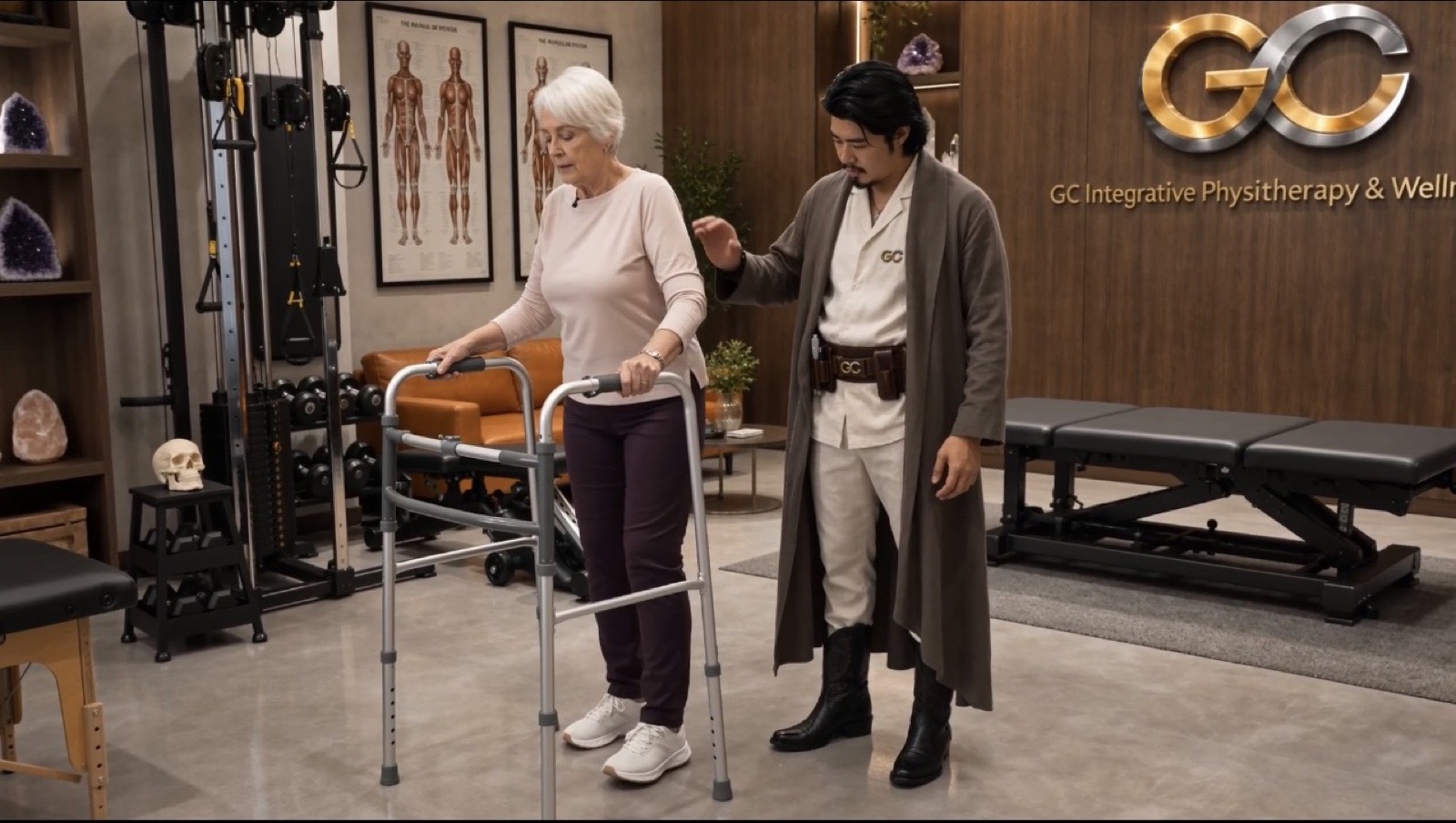
Effective care addresses confidence deliberately. In the GC Health Model this is why care often begins with low-threat movement rehearsal — building the sense that movement is safe — before progressing to more demanding balance and strength work. Rebuilding confidence is not a “soft” extra; it is a clinical target that can be measured and worked on.
Strength and gait: the working core of a program
Reviews of the evidence suggest that exercise programs which regularly challenge balance, and which build lower-limb strength, are among the most effective single ways to reduce falls risk in older adults. The key words are regularly and challenging: benefit tends to come from ongoing practice at an appropriate level, not from a one-off session. A physiotherapist-led program typically progresses through:
- Progressive lower-limb strengthening — for example graded sit-to-stand and step-ups, advanced safely over time.
- Balance challenge — supported weight-shift, narrowing the base of support and controlled reaching, adjusted to your level.
- Gait re-education — walking quality, turning, and negotiating steps and uneven surfaces.
- Functional and dual-task practice — the real tasks of daily life, sometimes while also managing a second task such as carrying or talking.
At GC Integrative this can be complemented by the Physio-Qi Method — physiotherapist-designed, Tai Chi and Qigong-informed therapeutic movement, offered at seated, supported and standing levels. Where clinically appropriate, light graded resistance can be added, so the same practice can support strength and steadiness together. Suitability is individually assessed and it is not suitable for everyone.
The home-plan concept
A program only helps if it continues between appointments, so a clear home plan is central to falls-prevention physiotherapy. A good home program is short enough to actually do, matched to your current level, safe to perform in your own space, and progressed as you improve. Your physiotherapist will show you each exercise, check your technique, and — with your consent — can share the plan and your progress with your GP, family or care team.
The goal of the home plan is not endless supervised sessions; it is self-management. In the GC Health Model this is the final “Empower” stage — handing back a home plan, a flare-up plan and a review pathway so you can maintain your gains with confidence. You can see how the full journey fits together in the interactive care pathway.
Care that comes to you: community aged-care delivery
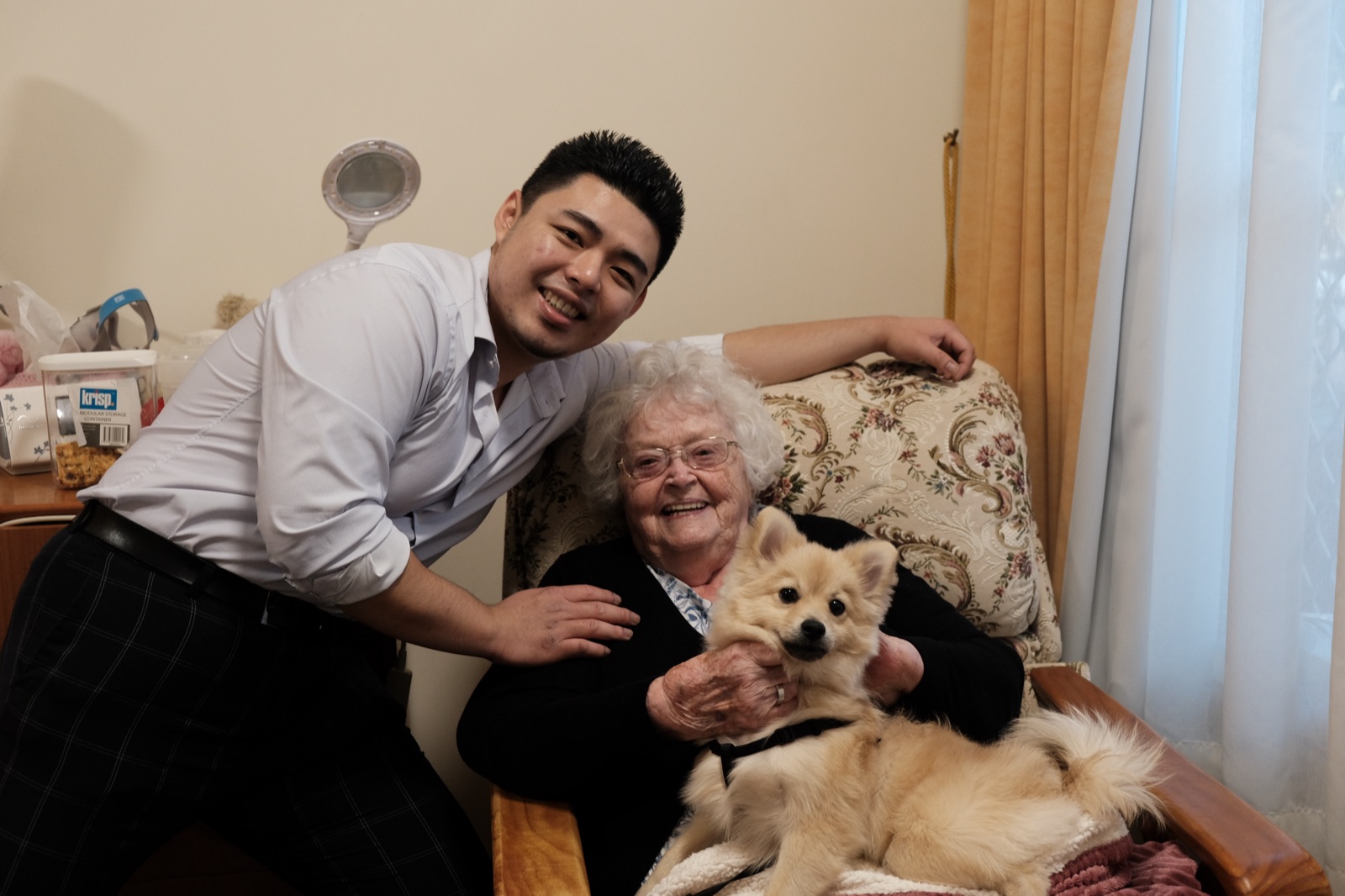
For many older adults, the easiest and safest place to work on balance is where they actually live and move. GC Integrative delivers community physiotherapy — care that comes to you in your home, in aged-care facilities and retirement villages, and in community settings across the North Gold Coast. Practising in your own environment has a real clinical advantage: your physiotherapist can see the actual stairs, rugs, chairs and pathways you use every day, and tailor the plan to them.
This community aged-care model is designed to fit around funding as well as location. Depending on eligibility, care may be supported through the Commonwealth Home Support Programme (CHSP), Support at Home, the NDIS, or private arrangements — see Pricing for detail, or explore Aged Care & Villages for facility and retirement-village programs.
When to seek a falls assessment
It is reasonable — and sensible — to seek a physiotherapy falls assessment when any of the following apply:
- You or a family member has had a fall or a near-miss.
- You notice new or increasing unsteadiness, or you have started holding furniture to move around.
- Fear of falling is beginning to limit what you do.
- You are returning home after a hospital stay or a period of illness.
- There has been a recent change in medication or general health.
Some symptoms are not a falls-prevention matter but a medical emergency. Sudden weakness, loss of consciousness, chest pain, or new neurological symptoms such as facial droop or slurred speech need urgent medical attention — contact your GP or call 000. Falls-prevention physiotherapy supports, and does not replace, your GP or specialist care.
If you are not sure where to begin, the Find My Pathway guide or the dedicated Balance & Falls Confidence service page will point you to a scope-safe next step.
Common questions
Can physiotherapy prevent all falls?
What does a falls-prevention physiotherapy assessment involve?
Is exercise safe if I am already afraid of falling?
Where is falls-prevention physiotherapy delivered?
When should an older adult have a falls assessment?
Sources
- World Health Organization. Falls — fact sheet. Accessed 14 September 2026.
- Sherrington C, et al. Cochrane Database of Systematic Reviews, 2019. Exercise for preventing falls in older people living in the community. Accessed 14 September 2026.
- Sherrington C, et al. British Journal of Sports Medicine, 2020. Exercise for preventing falls in older people living in the community: an abridged Cochrane systematic review. Accessed 14 September 2026.
- Australian Commission on Safety and Quality in Health Care. Falls — clinical topic. Accessed 14 September 2026.
- Frontiers in Public Health, 2023. Tai Chi for fall prevention and balance improvement in older adults: a systematic review and meta-analysis of randomized controlled trials. Accessed 14 September 2026.
External links open in a new tab. Last checked 14 September 2026.

About the author
Gary Chen
Gary Chen is an AHPRA-registered physiotherapist (Physiotherapy Board of Australia) and the founder of GC Integrative Physiotherapy & Wellness on the North Gold Coast. Balance, falls prevention and aged-care physiotherapy are core areas of his clinical work, delivered in the home, in aged-care facilities and retirement villages, and in community settings through the GC Health Model and the Physio-Qi Method.
Read Gary’s full profile →Move and feel steadier.
Book a falls and balance assessment, or ask your GP or care coordinator to refer you. Care can come to you across the North Gold Coast.